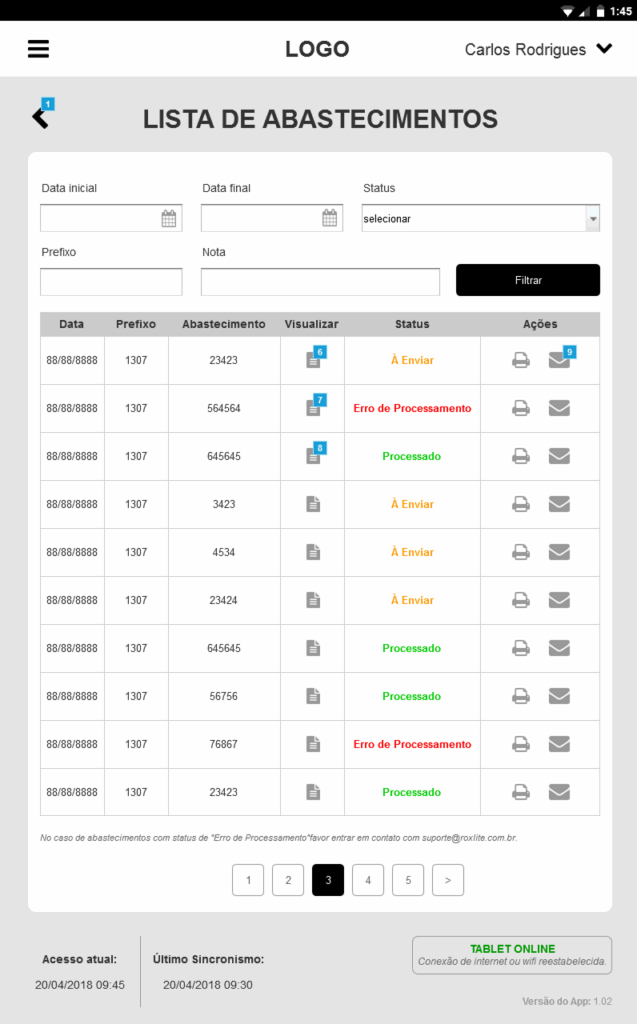
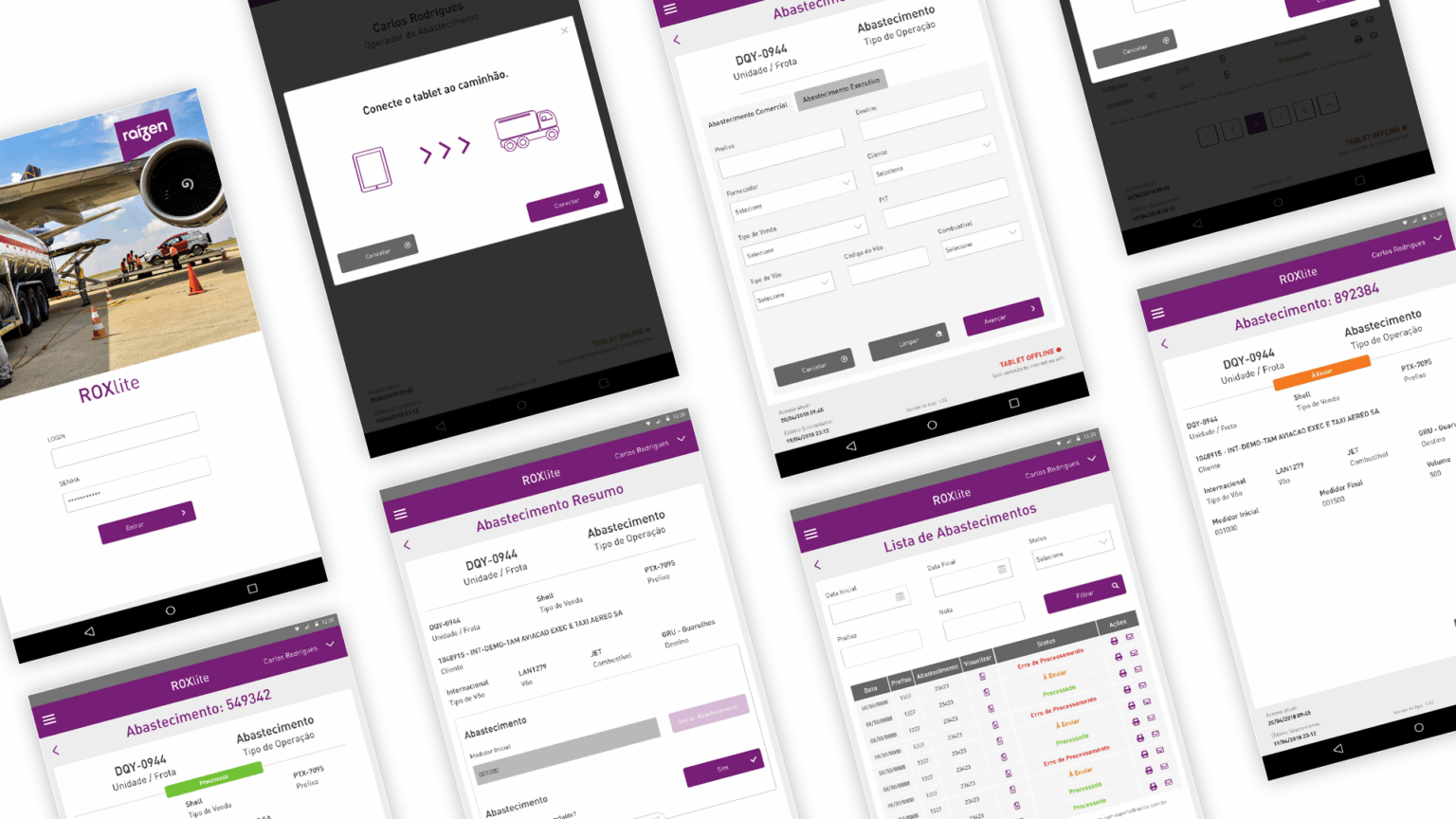
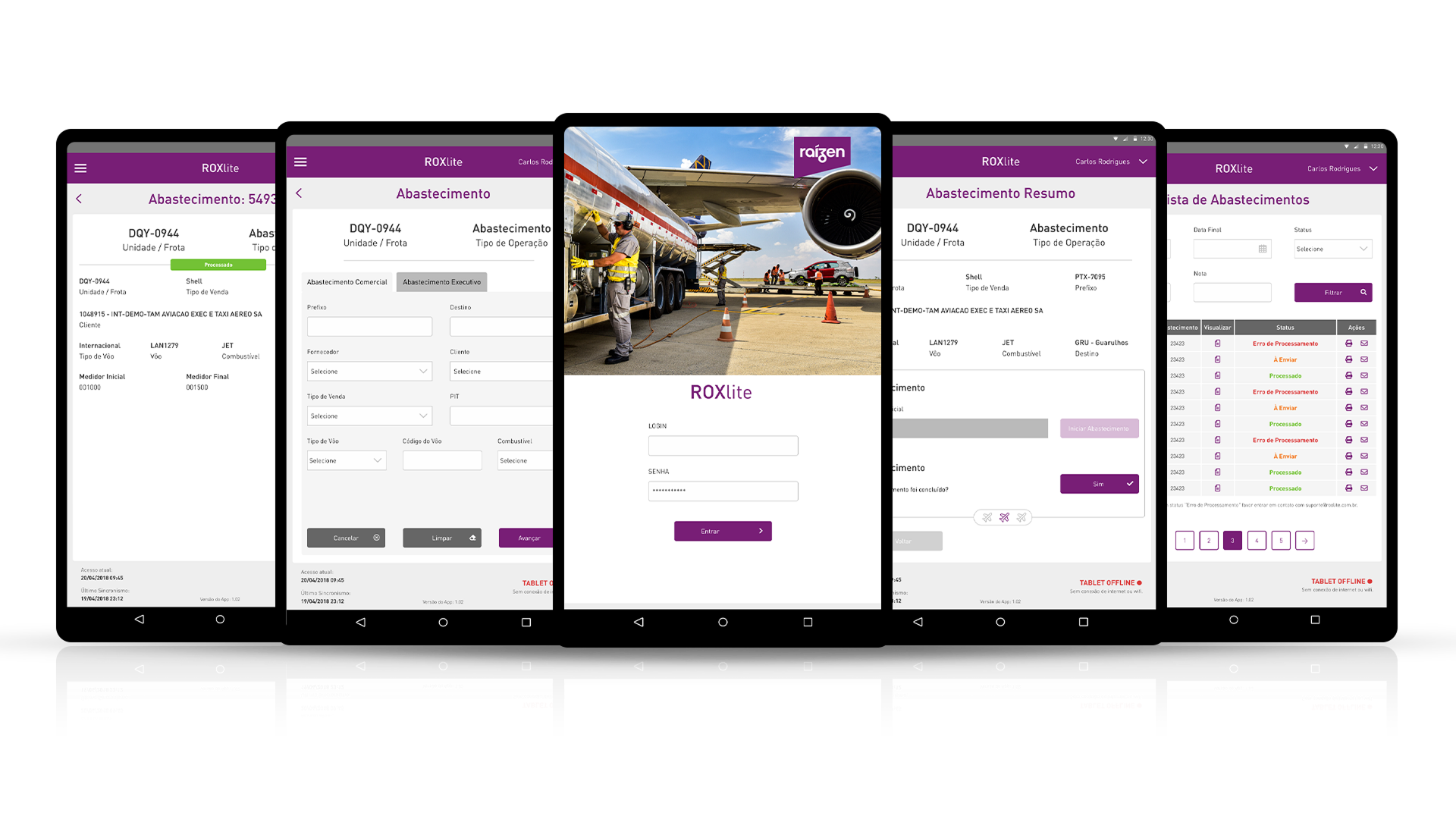
This project became a true success case by completely modernizing the process of issuing fiscal invoices for Shell fuel deliveries at Brazil's airports. With the new app deployed on tablets nationwide, the company gained an agile, secure system that's easy to update, eliminating the limitations of the old equipment. The solution brought significant gains in operational efficiency, reduced failures, and meaningfully improved the operators' experience. It also consolidated a scalable technology base that allows for the rapid rollout of improvements and ensures greater reliability and speed of service nationally and internationally, since it has already been expanded to Argentina.
Raízen is a Brazilian integrated energy company that operates in sugar and ethanol production, fuel distribution (licensed under the Shell brand in Brazil, Argentina and Paraguay) and renewable energy generation. It is one of the largest companies in the country, operating from the field to final distribution, employing more than 45,000 people and with more than 15,000 business partners spread across the country.
The company is a joint venture between Cosan and Shell, combining Cosan's biofuel production expertise with Shell's global distribution infrastructure.
Raízen, responsible for fueling aircraft with Shell fuel at airports, used outdated equipment to register and issue fueling fiscal invoices. This device had serious technical limitations: a closed system, no modern connectivity, and extremely complex maintenance and updates. This raised the challenge of creating a solution that would guarantee scalability and ease of updating across the entire national territory.
Image for illustrative purposes only
My work as UX/UI Designer was essential to transform a technical, limited process into an efficient and intuitive digital experience. I was responsible for leading the research and understanding of user pain points, mapping existing flows, and proposing a new information architecture that would simplify operators' daily tasks. I created the wireframes, high-fidelity prototypes and the app's final interface, always validating the solutions with the client and the development team. This close collaboration ensured that the final product was not only functional and scalable, but also visually consistent with the brand identity and centered on the real needs of users.
I conducted interviews with field fueling operators, direct observations of the current workflow, and analysis of the fiscal documents. The goal was to map real pain points, the usage context (airport environment, unstable connectivity, field operations) and user expectations.
Main problems identified:
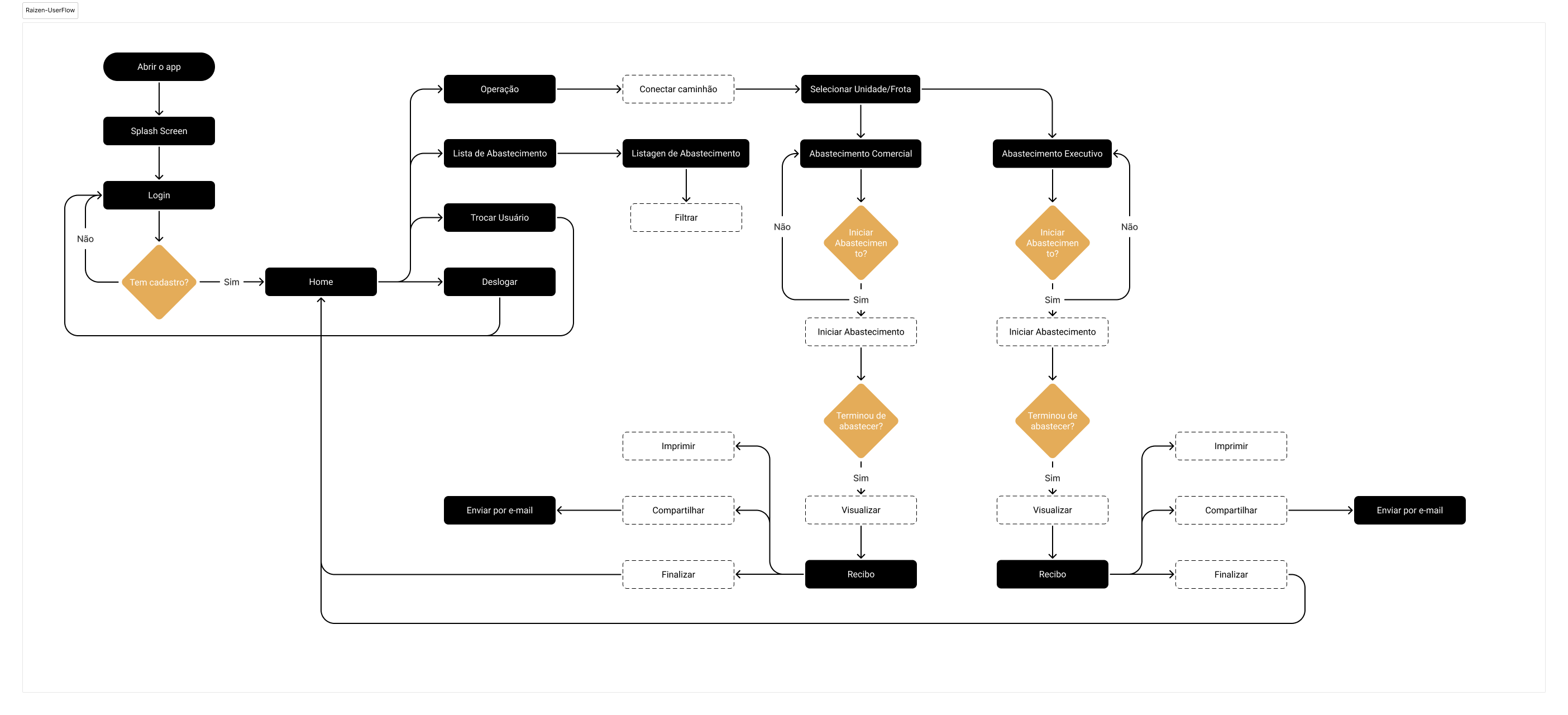
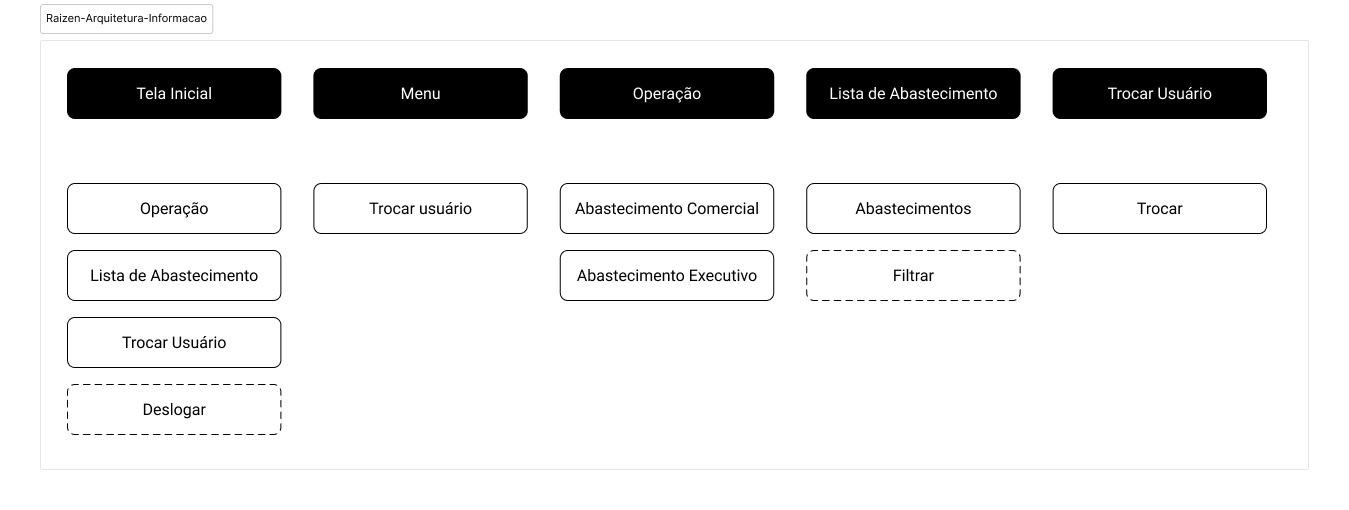
Based on these insights, I defined the app's main flows and information architecture. The journey was designed to be completed in just a few steps, with clear visual feedback at every stage of the fueling process.
38 years old
"I'm an aircraft fueling operator. I work rain or shine, and I like efficiency in my work."
ABOUT ME
who am I? what do I do?
ABOUT MY ROUTINE
who do I live with? what are my habits? what's my day like?
MY PERSONALITY
MOTIVATIONS & HOBBIES
what are my interests? how do I spend my free time?
PAINS
What are my difficulties? What would I like to solve?
DESIRES
what are my needs? what results would I like to have?
I mapped the entire user flow, from login to the issuance and sending of the fiscal invoice, considering both online and offline scenarios to ensure operational continuity.
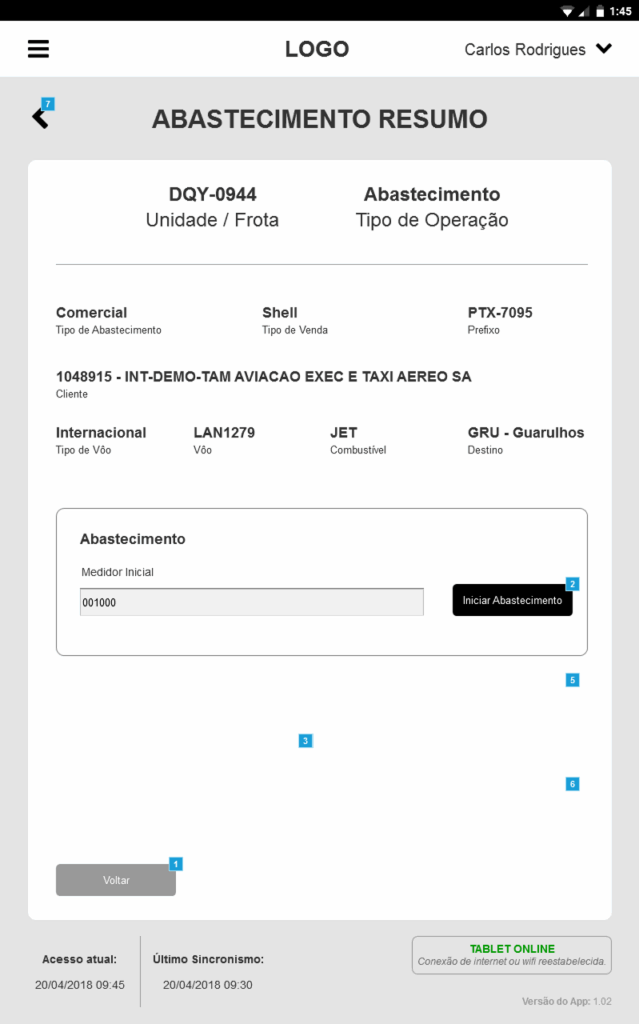
I developed low- and mid-fidelity wireframes to validate the flows with stakeholders before moving on to visual design. This approach allowed for rapid iteration based on feedback from the Raízen team.
The app's flows were quite simple, and testing merely confirmed what had already been identified up to that point. These low-fidelity prototypes allowed us to validate interactions with users in the early stages of the project, focusing exclusively on functionality, flow and information architecture, without distractions from more elaborate visual elements.
Example:
| SUGGESTIONS | SOLUTIONS |
|---|---|
| Include more information on the issued invoice. | Targeted adjustments were made to the invoice-issuance document, enabling the inclusion of the additional information. |
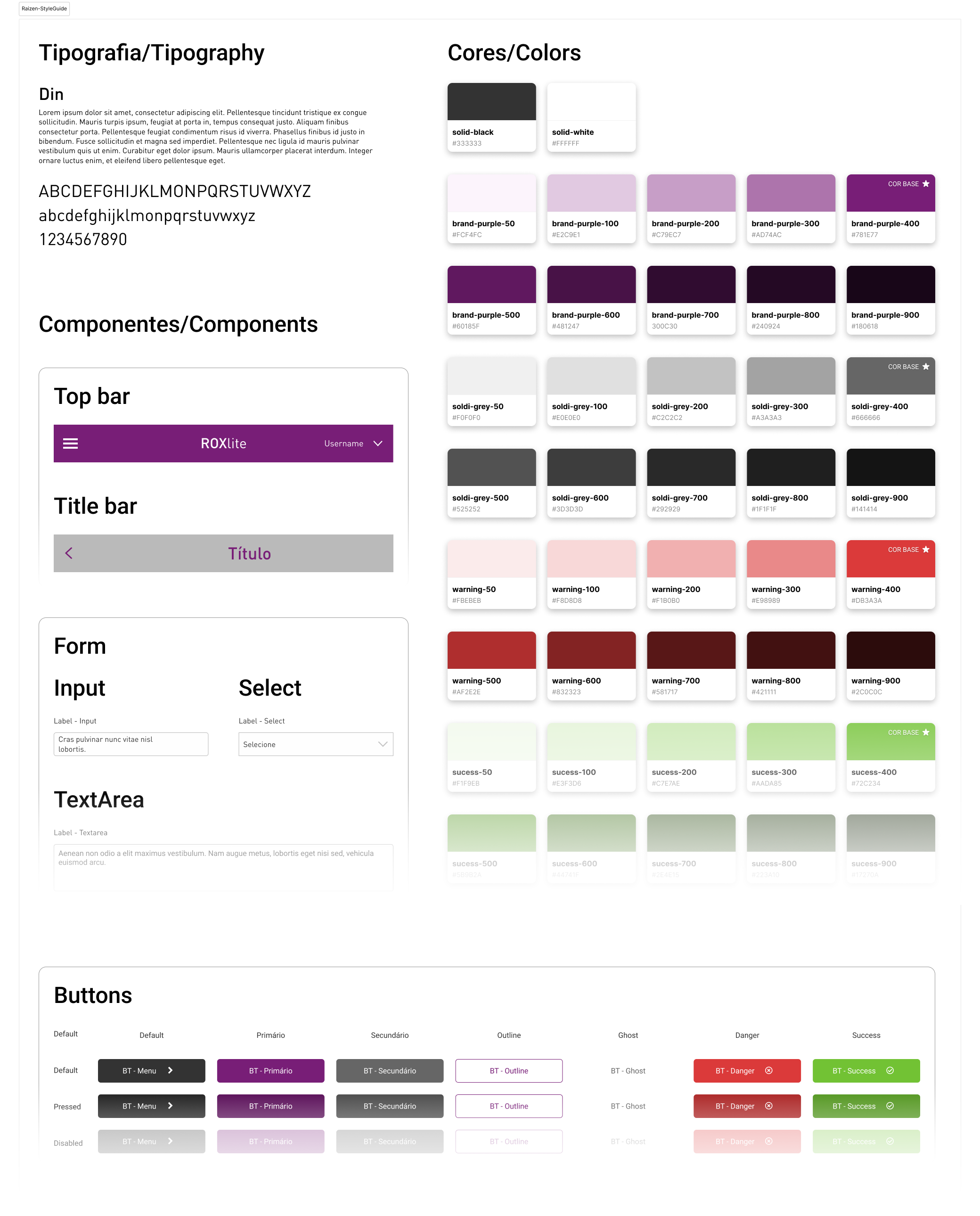
Following the Raízen marketing team's guidelines, I defined the color, typography and component standards that would make up the project, ensuring visual and functional consistency for the product. All the material was validated by the client, which enabled a more agile, scalable and professional interface-creation process.